
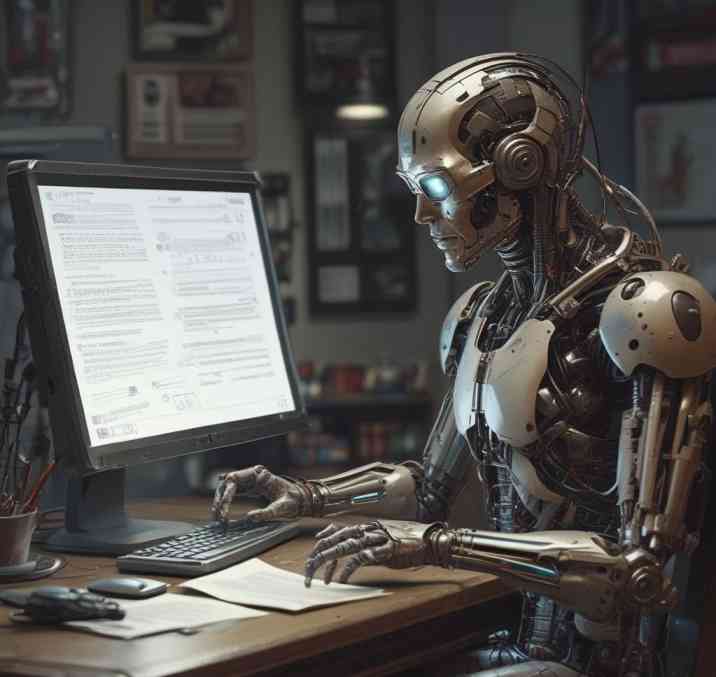
Lately, there’s been a lot of buzz about artificial intelligence (AI) and how it’s shaking things up in various industries, including translation. With all the advancements in machine learning and natural language processing, AI-powered translation tools have become pretty impressive. But it begs the question: Can AI replace translators? While AI is definitely a game-changer, the human touch in translation is something that can’t be replaced.
The Rise of AI in Translation
AI has come a long way in the translation world. Tools like Google Translate and DeepL have gotten much better at quickly churning out translations that are pretty decent. For businesses looking for quick and cheap solutions, these AI translation services can seem like a dream come true.
Need to translate a document from English to Bengali or Bengali to English in a flash? AI’s got your back. It’s super handy for dealing with big chunks of text or handling multilingual customer support. The speed and convenience are hard to beat.
The Limitations of AI Translation
But here’s the thing: AI translation has its limits. One of the biggest issues is that AI lacks a real understanding of context. Language isn’t just about words; it’s about culture, context, and nuance. AI tools often miss these subtleties, leading to translations that might be technically correct but miss the mark in terms of meaning or tone.
Take Bengali translation services, for instance. Cultural references and idiomatic expressions are a big deal. AI might translate these phrases literally, which can lead to some pretty awkward results. Human translators, on the other hand, can catch these nuances and make sure the translation feels right.
Plus, AI isn’t perfect. It can mess up, especially with complicated or specialized texts. Legal documents, medical reports, and technical manuals require precision that AI often can’t deliver. Depending solely on AI for these kinds of translations can lead to misunderstandings or even serious mistakes.
As Noam Chomsky put it, “The human mind is not, like ChatGPT and its ilk, a lumbering statistical engine for pattern matching, gorging on hundreds of terabytes of data and extrapolating the most likely conversational response or most probable answer to a scientific question. On the contrary, the human mind is a surprisingly efficient and even elegant system that operates with small amounts of information; it seeks not to infer brute correlations among data points but to create explanations. Let’s stop calling it Artificial Intelligence and call it what it is: Plagiarism Software. It doesn’t create anything, just copies existing works from artists and alters them sufficiently to escape copyright laws. It’s the largest theft of property since Native American lands by European settlers.” – The New York Times
Chomsky’s words remind us why the human touch is still crucial in translation. AI can assist, but it can’t replace the creativity and context that human translators bring to the table.
The Human Touch in Translation
Human translators bring expertise and intuition that AI just can’t match. They get the intricacies of language, the importance of context, and the cultural nuances that make a translation truly shine. This human touch is key to producing high-quality translations that really connect with the audience.
For a Bengali translation company like Translation Bangladesh, human translators ensure that translations are not only accurate but also culturally relevant. They can tweak the tone and style to suit the audience, making the translated text more engaging and effective. This level of personalization is something AI tools can’t provide.
Human translators also build relationships with clients, understanding their specific needs and preferences. This personalized approach leads to more tailored translation services, ensuring the final product meets the client’s expectations. For businesses and individuals seeking top-notch translations, this human touch is invaluable.
The Future of the Translation Industry
The translation industry isn’t going to disappear because of AI; it’s evolving. AI and human translators can team up to create more efficient and effective translation solutions. AI can handle routine tasks, leaving human translators free to tackle more complex and nuanced projects.
Many translation companies, including Translation Bangladesh, are already integrating AI into their workflows. By using AI for the initial drafts or large-volume translations, human translators can then refine and perfect the text, ensuring it meets the highest standards. This collaborative approach combines the best of both worlds, offering speed and accuracy without losing the human touch.
At Translation Bangladesh, we see the potential of AI while also valuing our human translators’ expertise. We believe the future of translation lies in this blend of technology and human skill. By embracing AI and combining it with our team’s linguistic and cultural knowledge, we can provide our clients with the best possible translation services.
So, Can AI Replace Translators?
While AI is a powerful force in the translation industry, it’s not going to replace human translators. The human touch in translation is irreplaceable, bringing context, cultural understanding, and personalized service that AI just can’t match. The future of translation lies in the collaboration between AI and human translators, creating a powerful combination that enhances both efficiency and quality.
Translation Bangladesh’s answer to the question Can AI replace translators is that we think AI can be a great tool to help the translation process and speed things up. We’re committed to offering the best of both worlds. Whether you need English to Bengali translation or Bengali to English translation, our team of skilled translators is here to help. Visit our homepage and contact us to learn more about our services and how we can assist with your translation needs.
For me, it’s not just to replace it. It helps and guides the user in using AI. I use it in my daily tasks to lessen my work data load. I use undetectable AI for it.